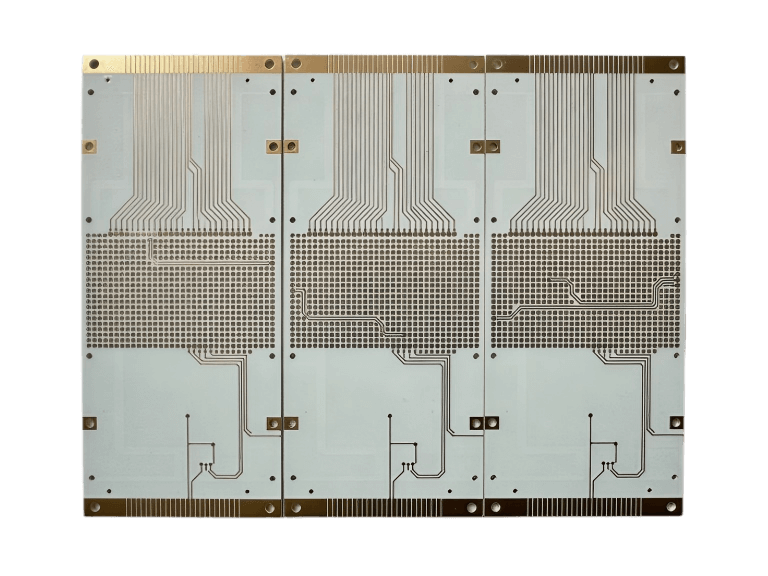
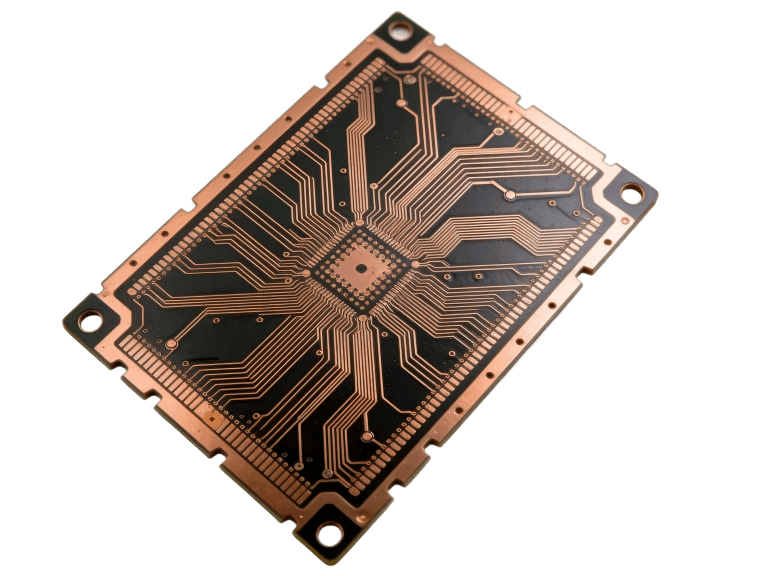
Aluminum PCBs, also known as aluminum substrate boards, are specialized printed circuit boards constructed by laminating copper foil circuit layers onto an aluminum or aluminum alloy substrate through a high-thermal-conductivity insulating layer. Their core feature lies in combining the electrical connectivity of PCBs with the high thermal conductivity and mechanical strength of aluminum. Unlike traditional FR4 substrate PCBs, these PCBs specifically address heat dissipation challenges in high-power electronic components, conforming to international standards such as IPC-2221 and IPC-6012. They serve as the core circuit carrier for high-power, high-temperature applications. Aluminum-based PCBs strike a balance between thermal performance and cost, making them widely adopted in LED lighting, automotive electronics, power modules, industrial control systems, communication equipment, and aerospace sectors.

In terms of structure, it mainly has three layers:
As a key competitive product, our aluminum PCB utilizes advanced composite processes for high-thermal-conductivity insulation layers. Thermal conductivity is customizable (up to 8.0W/m・K), with strong insulation layer adhesion and breakdown voltage ≥2KV, addressing heat dissipation challenges in high-power equipment.
Simultaneously, we achieve composite designs integrating aluminum substrates with thick copper, buried/blind vias, and other structures, adapting to more complex high-power applications.
Cross-product process integration: Enables R&D and production of composite PCB structures like aluminum + flexible or thick copper + HDI, meeting multi-dimensional performance demands of equipment.
Breakthroughs in High-Frequency & High-Density Technology: Mastery of Rogers substrate processing ensures high-frequency PCB impedance tolerance within ±5%. HDI PCB micro-blind via apertures as small as 0.05mm, with interlayer alignment accuracy ≤±30μm;
Environmental Compliance & Reliability: Full product range meets RoHS 2.0 and REACH regulations, achieves UL 94 V0 flame retardancy rating, and holds ISO 9001 and UL certifications, ensuring global market access compliance.

Smartphones, Laptops, Foldable Screen Devices, Smart Wearables, Smart Home Devices

New Energy Vehicle BMS, Automotive LEDs, ADAS Systems, In-Vehicle Central Control Systems, Motor Controllers

PLC Programmable Controllers, Industrial Robots, Frequency Converters, Industrial Power Supplies, Servo Systems

5G Base Stations, Routers, Switches, Optical Communication Modules, RF Antennas

Medical Imaging Equipment (CT, Ultrasound), Portable Monitors, Surgical Instrument Control Boards, Medical Wearable Devices

Satellite Communication Equipment, Spacecraft Control Systems, Charging Piles, Solar Inverters, Energy Storage Equipment
PCBWDX is a professional aluminum-based PCB manufacturer and one-stop solution provider. Specializing in comprehensive category coverage, high-precision manufacturing, and end-to-end service, we deliver reliable aluminum-based, HDI, and rigid-flex PCBs. Driven by technical expertise, consistent quality, and efficient delivery, we empower clients to excel in the market. We remain committed to innovation, expanding our offerings to become a trusted global electronics manufacturing partner.
Years of PCB focus, core tech mastery (e.g., aluminum-based PCBs), and advanced equipment enable us to meet diverse industry needs with full product lines.
Large-scale procurement and production reduce overall costs, while precise material/process selection helps you control budgets without sacrificing performance.
Backed by authoritative certifications and strict inspections, our PCBs operate stably under extreme conditions, protecting your product reputation.
We deliver rapid order fulfillment, dedicated technical support, and prompt post-sales resolution to accelerate your product development and launch.




It has excellent heat dissipation, several times better than traditional FR-4 PCBs, and can lower the operating temperature of components.
FR-4 uses fiberglass epoxy resin as the base material and has poor heat dissipation; aluminum substrates use aluminum as the base material and are designed for high heat dissipation, suitable for applications with heat-generating components.
Yes, it has a copper foil circuit layer on the surface, and the soldering method is the same as with ordinary PCBs.
No, it is also used in power modules, automotive lighting, and other products that require high heat dissipation.
Yes, conventional aluminum PCBs are mainly single-layer or double-layer. Multilayer aluminum PCBs (4 layers and above) require a composite structure of “aluminum layer + insulation layer + multilayer circuitry,” which has a higher process complexity than ordinary aluminum PCBs.
Special processing requirements include:
