Rigid PCB (Rigid Printed Circuit Board) is a printed circuit board with a rigid substrate and a fixed shape. It is the most common and widely used type of PCB in the electronics industry. Its core characteristics include high mechanical strength, inability to bend or fold, and the ability to provide a stable mounting substrate and electrical connection paths for electronic components—functioning as the “skeleton” of electronic devices.

According to the IPC-6012 standard, a PCB is classified as rigid if it simultaneously meets the following conditions:
We can customize rigid PCBs from single- to multilayer, up to 30+ layers. Please get in touch with sales@pcbwdx.com for a professional solution.
Therefore, you will also know flexible PCBs and rigid-flex PCBs; they are entirely different from rigid PCBs. From material and applications are all different, you can find more information by clicking on my previous link.
There are several via hole types in rigid pcb and you can find a sample in the picture below:


PCBWDX offers multiple types of rigid PCB manufacturing services:
Standard FR4 Boards: The most widely used PCB material, featuring excellent insulation and mechanical strength, suitable for various general-purpose electronic devices
High TG FR4: High-temperature resistant version, ideal for applications requiring enhanced thermal performance
Halogen-Free FR4: Environmentally friendly material compliant with international standards like RoHS
Multi-Layer FR4 Boards: Supports high-density interconnect designs up to 40 layers
High-thermal-conductivity ceramic substrates: Feature extremely low thermal expansion coefficient (CTE) and outstanding thermal conductivity, suitable for high-frequency, high-power, and high-temperature environments
Aluminum oxide (Al₂O₃) ceramic boards: Excellent insulation and mechanical strength
Aluminum nitride (AlN) ceramic boards: Higher thermal conductivity, ideal for high-end thermal management requirements
Aluminum Core PCBs: Exceptional thermal dissipation, widely used in LED lighting, power modules, and high-power circuits
Copper Core PCBs: Higher thermal conductivity, suitable for applications with extreme heat dissipation requirements
Iron Core PCBs: Cost-effective with good mechanical strength
Polytetrafluoroethylene (PTFE): Dielectric constant of 2.1 (at 10 GHz), dielectric loss < 0.0002
BT Resin: Glass transition temperature (Tg) of 230°C, moisture absorption < 0.1%
PCBWDX’s rigid PCB products are widely used in:
| Industry | Typical Applications |
| Consumer Electronics | Smartphones, tablets, laptops |
| Automotive Electronics | ECU control units, sensors, in-vehicle entertainment systems |
| Industrial Control | Automation equipment, robot controllers, industrial PCs |
| Medical Devices | Monitoring equipment, medical imaging devices, surgical instruments |
| Communication Equipment | Base stations, routers, switches, RF modules |
| Lighting | LED lighting drivers, smart lighting control systems |
| Aerospace | Satellite communications, navigation equipment, control systems |
| Energy | Solar inverters, wind energy controllers, energy storage devices |


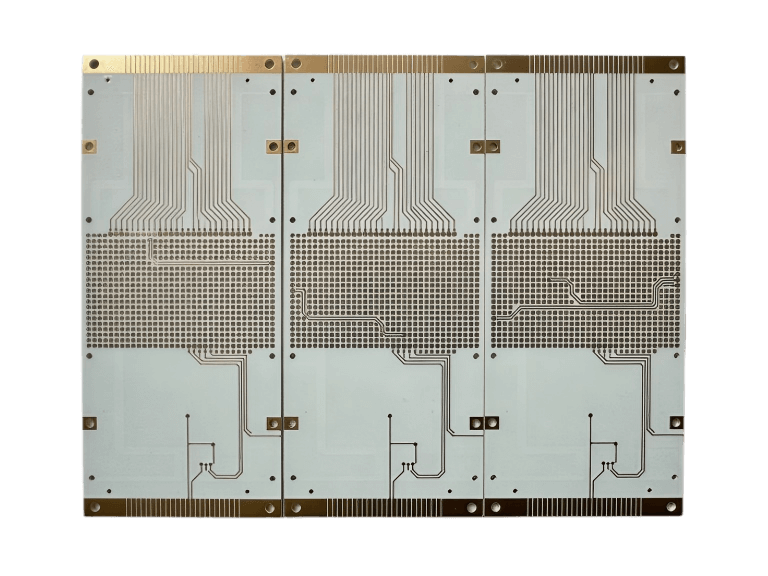
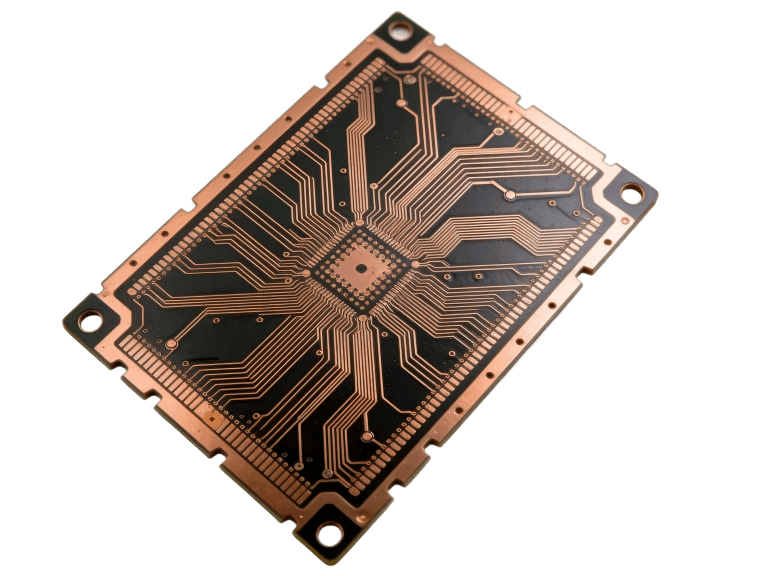

The core difference from flexible PCBs is that they cannot be bent, making them suitable for devices requiring a stable structure.
They are used in applications where the circuit board shape needs to be fixed, such as computer mainframes, home appliances, and industrial control equipment.
They are low-cost, easy to manufacture, and structurally stable, making them suitable for mass production.
Key influencing factors include substrate type, number of layers, line width and spacing accuracy, surface treatment process (such as tin plating, gold plating, immersion gold), and order quantity. The more layers, the higher the accuracy, and the more complex the process, the higher the cost.
The core differences among the three lie in their form flexibility and applicable scenarios:
